CELLFIL Develops First Policy Paper to Support Europe’s Bio-Based Future
The CELLFIL project has developed its first policy paper, presenting recommendations to support the growth and market uptake of bio-based materials …

The CELLFIL project has developed its first policy paper, presenting recommendations to support the growth and market uptake of bio-based materials …
From sourcing renewable raw materials to manufacturing high-performance products, collaboration is essential to accelerate Europe’s transition towards a circular bioeconomy.
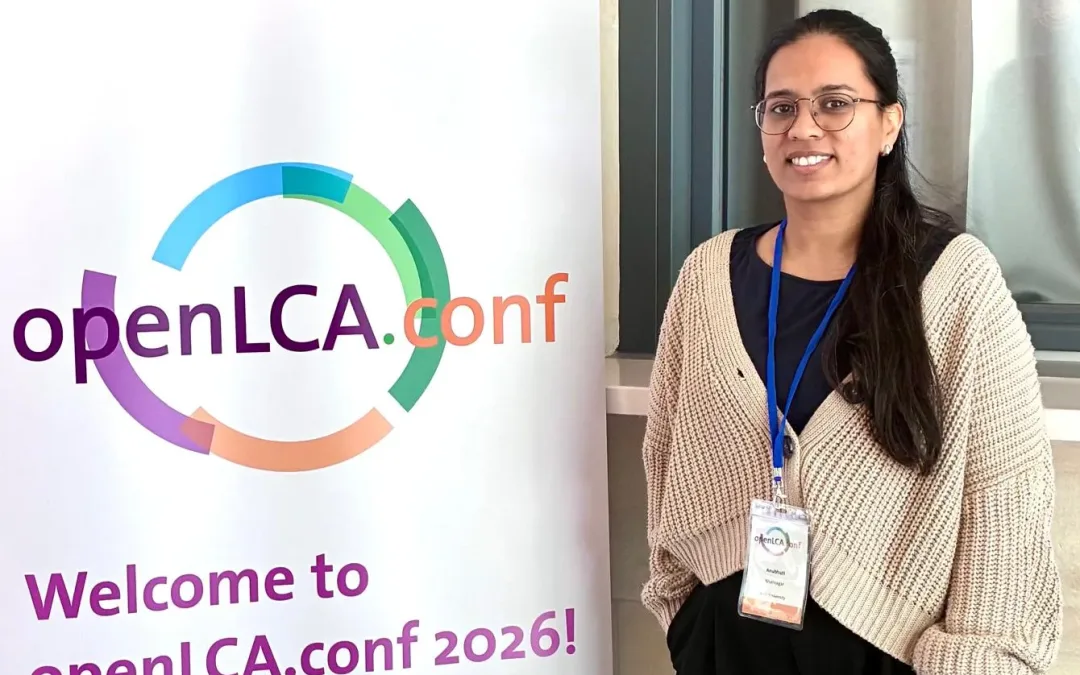
What happens to social risks in circular textiles? Insights from CELLFIL and Aalto University at openLCA 2026 reveal why recycling alone is not enough.
New CELLFIL research reveals how consumers understand textile materials, why bio‑based options like orange‑peel fibers face skepticism, and what must change.
This review examines key TEA, LCA, and social indicators to assess whether MMCF technologies can scale sustainably within global textile value chains.
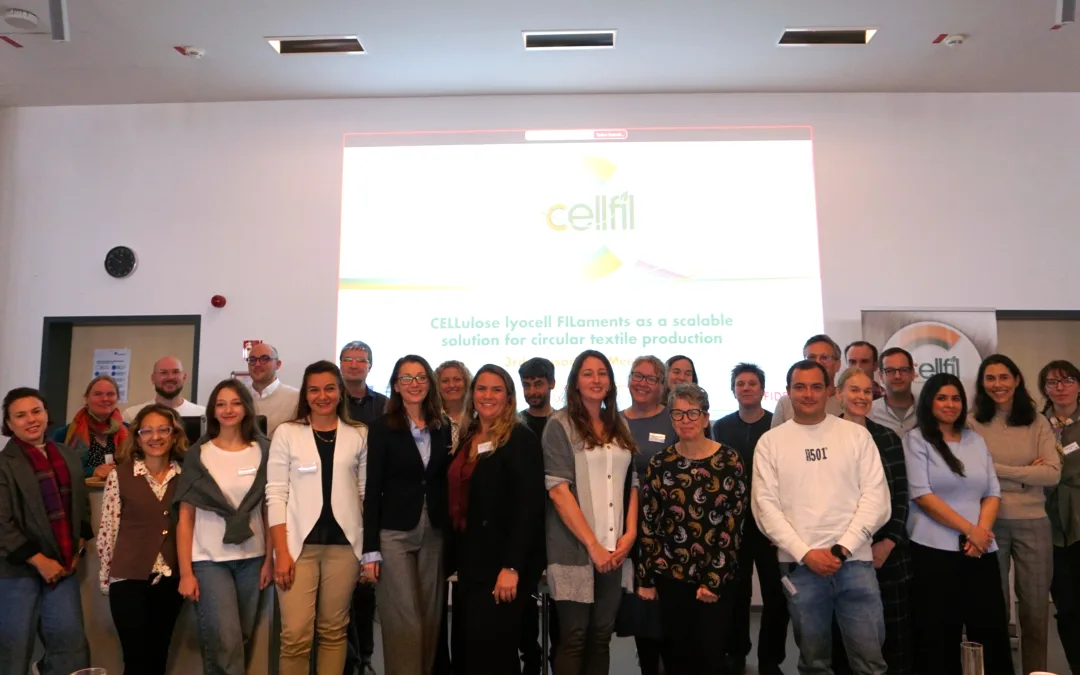
The CELLFIL consortium gathered for its third project meeting on October 22nd-24th, hosted by Hochschule Niederrhein in Mönchengladbach, Germany.
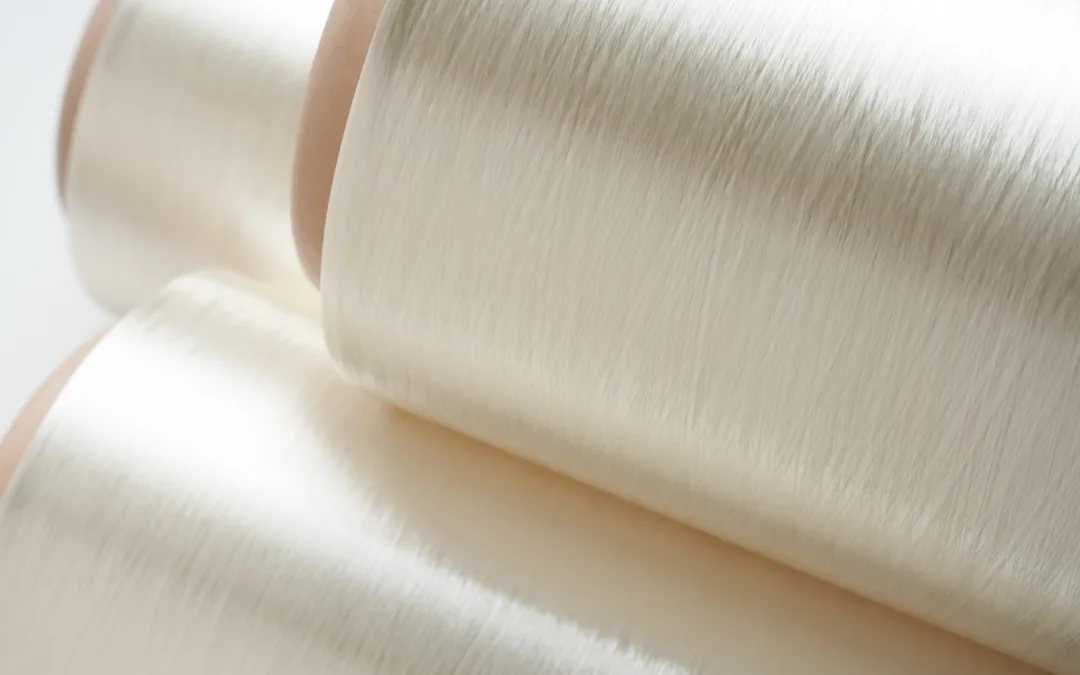
The global demand for textile fibres is skyrocketing. According to the latest Materials Market report, the production reached 124 million tonnes, …
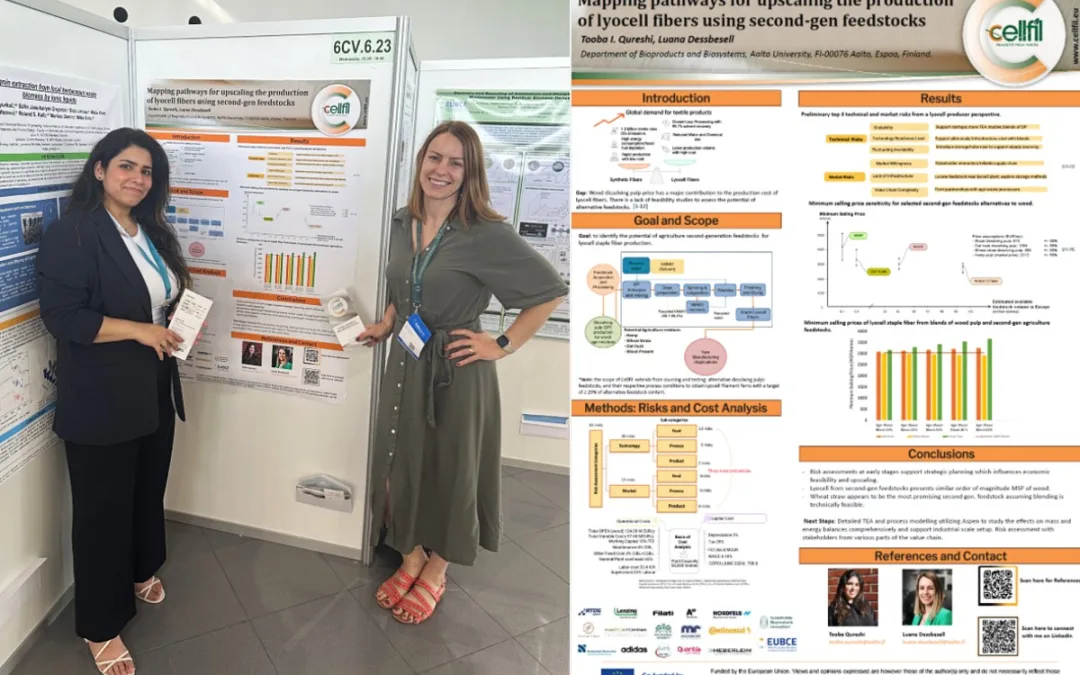
Presenting at EUBCE 2025 its innovative approach to upscaling bio-based Lyocell filament yarns, CELLFIL project brought fwd a bold vision for reshaping the European textile sector.
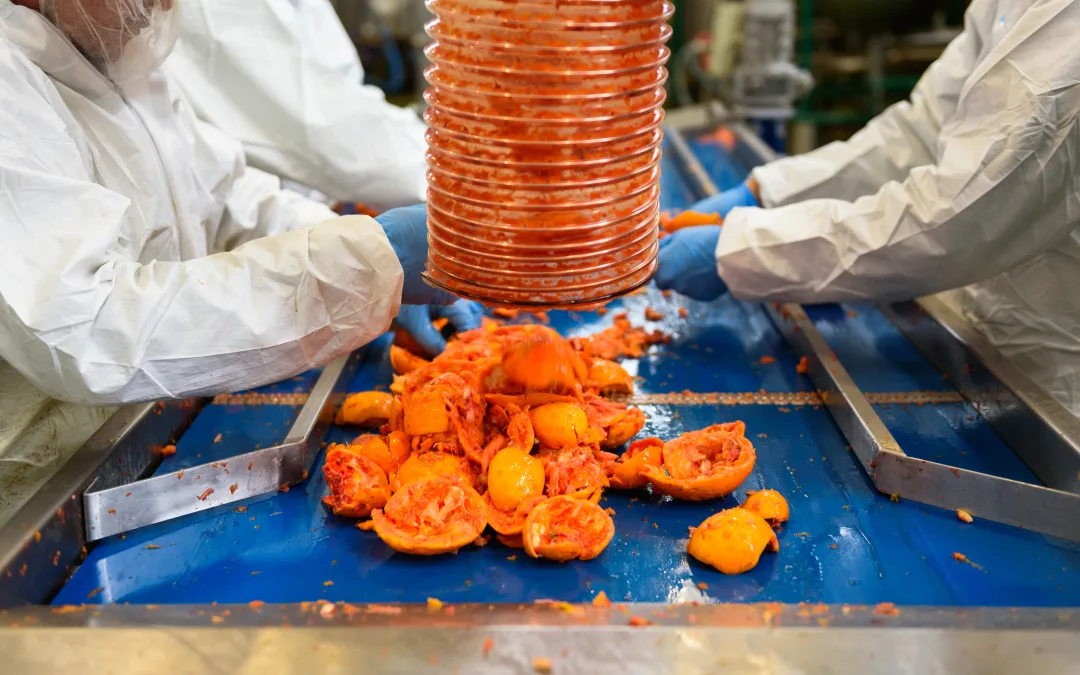
The CELLFIL project partners met in Catania, Italy, to review the progress toward upscaling the sustainable Lyocell Filament (LF) for circular textile production.
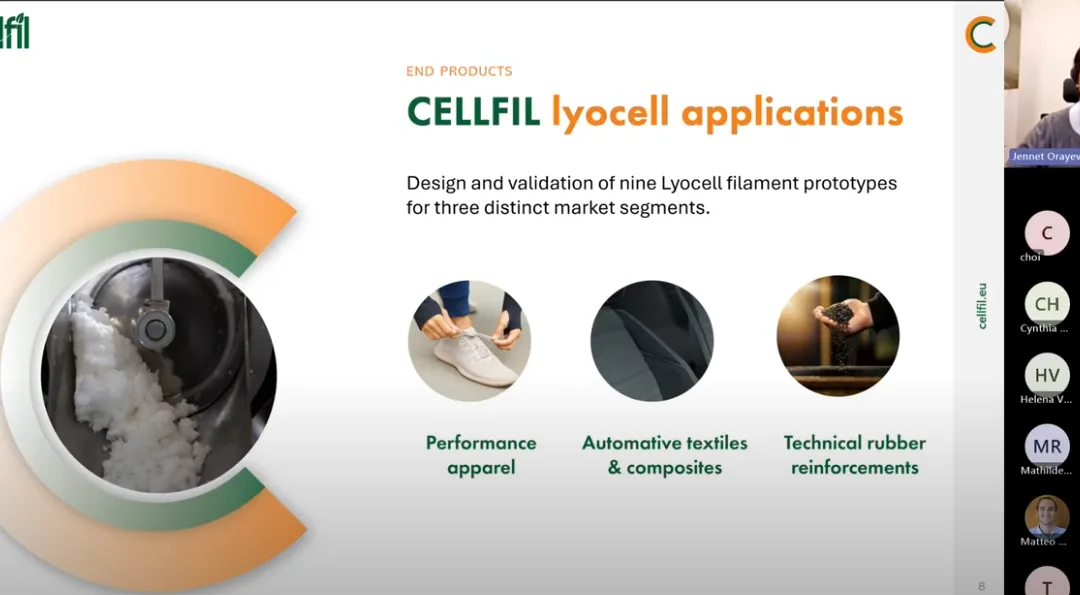
On 31 January, CELLFIL joined inspiring projects from the ECOSYSTEX community for the 12th edition of the ECOSYSTEX Insights Series webinar, showcasing cutting-edge solutions …